How To Upskill While Working A Full-Time Job
Upskilling is no longer optional. The way work gets done is shifting faster than ever, with technology evolving year after year. Job security now rests on the skills a person brings to the table. Most professionals know this, yet many struggle with a simple problem: how to build new skills while managing a full-time job.

Long working hours, deadlines to meet, family obligations, and mental exhaustion leave one with very little time to learn something new. Consequently, most individuals put off learning new things and wait for what they believe to be “the right time.”
In reality, there is no such thing as the perfect time for personal growth. Being an upskiller while being in a full-time job is, in essence, not looking for more hours in your day but utilising your existing hours in a better, more prioritised manner. This book will give you some insight into just that.
What Upskilling Means In An Employee-Based Full-Time Job Situation?
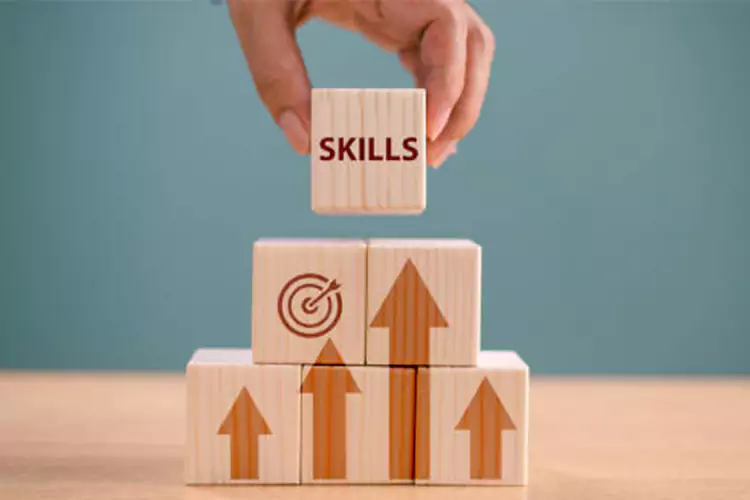
Upskilling simply implies that you enhance or build upon your current skill sets or learn something that is pertinent or useful in your current or future work environment. When it comes to professionals, up-skilling does not entail returning to college or resigning from your job in order to go back to school.
Upskilling has often been equated with reskilling. Though upskilling aids in developing skills in the current occupation, reskilling requires new skills altogether to pursue a different job/industry. Both are important, but for regular company employees, upskilling can be the first step.
When you are already juggling a full-time job, education and training need to work around real life. They must be goal-oriented, adaptable, practical, and easy to apply. Without this balance, people may start with intent, but sustaining learning quickly becomes difficult to manage.
The Importance Of Upskilling As A Full-Time Employee

Many people think about upskilling only when they feel stuck at work. By then, the gap is often too wide to close easily. Learning alongside the job keeps skills current and helps professionals stay ahead instead of scrambling to catch up.
1. Keeps You Relevant In the Job Market
What mattered five years ago will not be sufficient in the current scenario. Upskilling will help you remain updated on industry trends and what is desired by employers.
2. Enhances Professional Development
Learning professionals tend to earn promotions, high-quality tasks, and management roles compared to those who do not learn much.
3. Provides Job Security
Employees with upgraded skills are not easy to replace. Employee upskilling increases the value of your job in the long term.
4. Enhances Confidence At The Workplace
The more new tool knowledge or concepts you understand, the more confident you'll be in making contributions during discussions or decision-making.
Upskill Plan In Simple Steps
Step 1: Identify the Right Skills to Learn
The most common trap is learning diverse skills without having any personal agenda. Waiting for the appropriate timing is often crucial when time is running out.
Start by asking yourself the following questions:
What skills does my current job entail?
What are some gaps within my team?
Where do I want to be in the next two to three years?
Search the job postings for the positions you are targeting. Find common skills, tools, or certifications. This is a great way to spot areas of critical importance rather than irrelevant areas.
Don’t give in to the temptation to learn everything. Choose one main skill and, if it helps, one complementary one.
Step 2 – Define Learning Outcomes and Realistic Learning Goals
Aiming for no specific goals in an education can lead to uncompleted courses and dwindling enthusiasm. And it is important that your goals work with your schedule rather than against it.
Instead of general goals like "I want to learn data analysis," make your ambitions specific, for example:
“I will finish a beginner course in three months.”
“I will work on this skill for half an hour, five days a week.”
Break down learning into smaller milestones. This will help you stay motivated because of the progress that is being made. Also, be truthful to yourself when it comes to energy levels. Being able to learn three hours after work is not as impressive as being sustainable in the long run.
Step 3: Build A Realistic Learning Routine
Working professionals face time as a challenge, but few realise what may be achieved in short bursts with focus.
Experiment with Time Blocking: Allocate fixed learning time slots, like scheduling meetings. Choose times that suit your lifestyle: early morning, lunch break, or late night.
Adopt Micro-learning: Study sessions should be shortened from the usual marathon study sessions that last long. Instead, learning sessions should only be 20-30 minutes.
Make weekends count: Spend your weekend analysing, practising, or catching up, not studying intensely that robs you of your sleep.
Consistency trumps marathon practice. Just 30 minutes a day will add up.
Step 4: Pick The Right Learning Platforms
When choosing learning platforms, it's not necessary that every platform can support a full-time schedule. It’s essential to choose the resources that support your schedule and the best method of learning.
Online Classes: Online classes involve pre-recorded videos that allow viewers to learn at their own pace.
Condensed Certifications: Practical skills certifications have always been considered far more important than the usual academic programs when it comes to learning
Free vs. Paid Learning Resources: While free resources provide foundational knowledge, it’s worth noting that paid courses may be a much better option when it comes to teaching.
Hands-on Learning: Courses which have assignments, projects, or case studies enable you to implement your knowledge rather than just acquire it.
Step 5: Apply Your Newly Acquired Knowledge To Your Job
It is only in application that learning will be remembered. So, when it comes to upskilling that leads to better productivity, the true benefit surfaces when one begins to apply these new skills in practical contexts.
Look for opportunities to:
Optimise existing procedures
Volunteer to handle some additional tasks
Use your knowledge to assist teammates
Even small applications of it improve learning and increase confidence. You do not have to be some kind of expert before you can apply what you have learned.
Step 6: Use Workplace Support and Opportunities
Professionals are often reluctant to share learning goals in the workplace since it may be perceived as displeasure with one's job. This is not always true since most supervisors prefer employees with ambitions to learn more.
You can:
Request learning suggestions
Leverage guidance from more experienced professionals
Participate in in-house training courses
Participate in Cross-Functional Projects
Learning through a job reduces additional effort. It is easier to apply skills learned through job training.
Step 7: Maintain Motivation and Avoid Burnout
Upskilling is meant to add life, not suck the life out. Burnout occurs when study and work crowd in without any balance.
Establish Realistic Expectations: Not everything will move at the speed of light, which is okay.
Track Your Progress: Start a simple log to record what you've learned every week. Watching yourself improve helps motivate you.
Celebrate Small Wins: Completing a module or implementing a concept calls for a thumbs-up.
Know when to rest: Rest isn't being lazy. Ultra-short breaks stave off mental fatigue and help you stay steady over the long haul.
Common Mistakes To Avoid While Upskilling Full-Time
Usually, people give up not because of a lack of discipline, but because of the wrong approach to learning.
Typical mistakes:
Taking too many classes at once
Learning without any definite goal
Omitting the practical implementation
Sacrificing sleep and health
Expecting quick results
This will help in avoiding such traps and sustain upskilling in an industrious and effective manner.
How Long Does It Take To See Results From Upskilling?

Upskilling doesn't happen overnight. Small gains happen within a couple of weeks, but anything significant will happen after months.
Short-term benefits:
Clearer grasp of tasks
Boosted Confidence
More employee engagement at work
Longer-term benefits:
Role reversal
Earned promotions
Better job opportunities
It is progress, not speed, that matters. And it is achieved through consistency.
Conclusion
Upskilling with a full-time job is hard, but not impossible with proper planning. You don’t require ideal habits, endless amounts of energy, or expensive training sessions. You require clarity, consistency, and persistence. Keep small goals. Identify one skill to work on. Establish a realistic time investment. Implement your acquired skills and insights. Over time, your small moves will change your career trajectory without disrupting your routine. “The best time to plant a tree was yesterday, the next best time is now,” as the saying goes.

.webp)