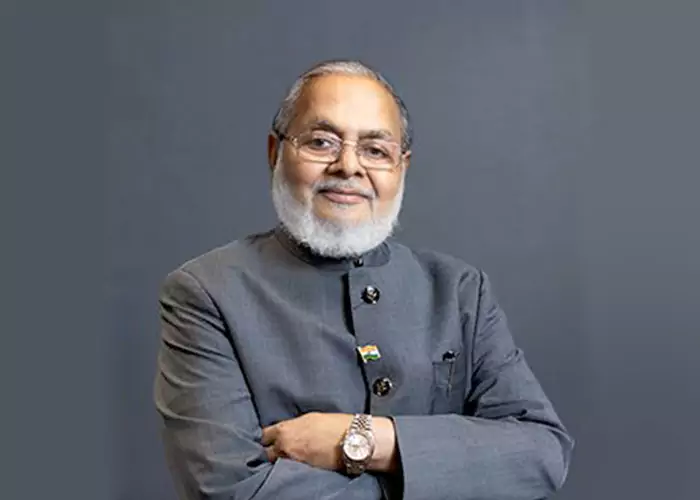
Financial Literacy: The Foundation of National Development. Krishnakumar K T, CMD , Oleevia Grameen Credits.
A nation does not become strong merely through government budgets, policy announcements, or growth in the stock market. The real strength of a nation begins at home — in the financial stability, discipline, and awareness of its families

Financial literacy, therefore, is not just a personal skill; it is one of the most essential foundations for national development.
Today, many people assume that higher income automatically leads to a better life. But reality proves otherwise. Some families earning modest incomes live peacefully, while others earning lakhs every month struggle with stress, debt, and insecurity. This clearly shows that happiness is not decided by the amount of money one earns, but by how wisely one manages it. Income may increase, but if financial discipline does not grow along with it, financial distress will continue.
One of the biggest problems in modern society is that people are constantly searching for ways to spend money, not ways to save or multiply it. Easy access to loans, credit cards, and consumer finance has encouraged emotional spending rather than logical financial decisions. Many individuals begin their careers not by building savings, but by building EMIs. This creates long-term pressure, anxiety, and dependency.
Financial literacy changes this mindset. It teaches individuals and families how to plan their income, control unnecessary expenses, create savings, take insurance protection, and make productive investments. It also helps people understand that credit is not dangerous in itself, but unwise credit is. Loans taken for productive purposes can build assets and income, while loans taken for status, luxury, or emotional spending often create poverty and stress.
The importance of financial literacy becomes even greater when we look at the nation as a collection of families. If families are financially stable, the nation becomes stable. Sound household budgeting leads to regular savings, timely loan repayments, stronger banks, healthier businesses, and better economic circulation. When families manage money properly, businesses receive payments on time, banks face fewer defaults, and the financial system becomes more resilient. In this way, national development does not begin only in Parliament; it begins in the kitchen, at the dining table, and in family discussions about money.
Financial literacy must also start at an early age. Children should be taught where money comes from, how hard parents work to earn it, and why saving matters. If children grow up without understanding the value of money, they may develop habits of careless spending in adult life. Teaching financial discipline in schools can create a generation that is more responsible, confident, and economically prepared.
India does not merely need more money; it needs better money management. Even large financial assistance cannot create lasting prosperity if people do not know how to use money wisely. Financial literacy is the real path to economic stability, social peace, and national progress.
If India wants stronger families, stable institutions, responsible youth, and sustainable growth, financial literacy must be treated not as an optional subject, but as a national priority.

.webp)