Soft Skills That Can 2x Your Career Growth
Traditionally, to get ahead in one’s career, one needed degrees, credentials, and technical skills. While these still play an important role, they no longer suffice on their own. Many technically qualified professionals can stall in their progress, while others with relatively mediocre skills can rush ahead. The key often is soft skills.
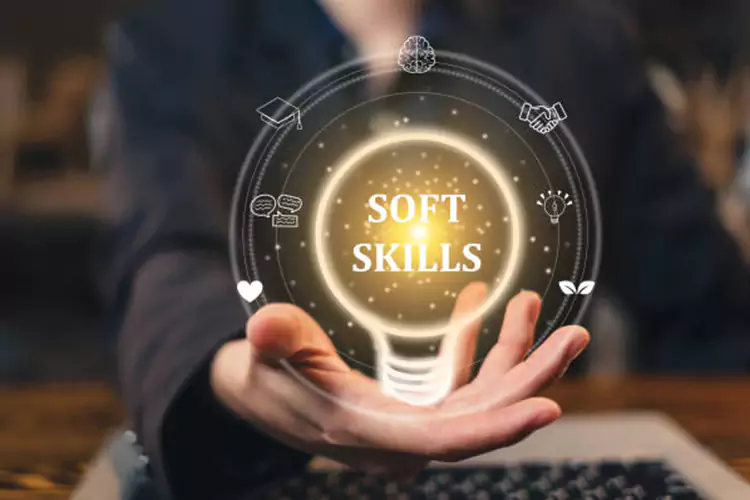
Soft skills affect how you communicate with others, how you can work well under stress, work effectively with others, or recover from disappointing events. Soft skills impact how well you are perceived by your superiors, how well others trust you, or how often you are given an opportunity to lead. These days, having greater soft skills in your work arena can literally multiply overall career success by two.
What Are Soft Skills And Why Are They Important Today?
Soft skills tend to be personal skills that can affect the way an individual works as well as the way he/she relates with other people. They can’t be measured using tests because they will be reflected in the individual’s behaviour. They consist of people skills.
Technical know-how could provide an entry ticket to a job, but soft skills are more critical in terms of helping you keep that job and grow in that job. Now employers are looking for someone who can communicate well, someone who can handle change well, and someone who can work well with different kinds of people.
Top Soft Skills That Can 2x Your Career Growth
1. Communication Skills

Being an effective communicator does not mean being fluent in English or using many words. It means the ability to express one’s ideas confidently.
Good communicators can easily clarify their work, put their opinions in a proper manner, and reduce the likelihood of misunderstanding communications. This is important in meetings, emails, customer communications, and coordination with team members. Good communicators appear to be trustworthy and have the qualities to be in leadership positions.
How to enhance communication skills:
Practice describing what you do in simple terms
Active listening in place of waiting for one's turn of speech
Raise questions when there is any doubt
Emails and Messages should be short and organised
Observe how self-confident speakers lead a discussion and emulate this practice
2. Emotional Intelligence (EQ)

Emotional intelligence encompasses the ability to recognise and control your own emotions as well as the tendency to recognise the emotions of others.
In the working environment, it involves remaining calm during an altercation, instead of acting on the emotions experienced. As one grows into a position of seniority, EQ plays an important part over IQ. Leaders with low EQ may find it difficult to cope with employees.
Tips to increase Emotional Intelligence:
Pause before acting in stressful situations.
Think of attempts to understand others’ views, aside from your own
Feedback needs to be received without taking it personally
Emphasise empathy in daily interactions
3. Adaptability and Flexibility

The work environment is constantly changing, with new technologies, new methods, and new expectations. A willingness to adapt suggests an openness to learn. Workplaces are constantly in motion, with new technology, new processes, and shifting expectations
People who learn to adapt fast earn trust because of their ability to take up new challenges and hard responsibilities. They do not fear change but instead see it as an opportunity to develop. This approach adds value in an uncertain or rapidly growing market.
How to be more flexible:
Willingness to learn new tools and skills
Avoid saying ‘This is not my job’
Maintain knowledge of trends within the sector
Look at change as an opportunity for growth
Keep your mind focused on finding solutions instead of problems
4. Problem-Solving and Critical Thinking
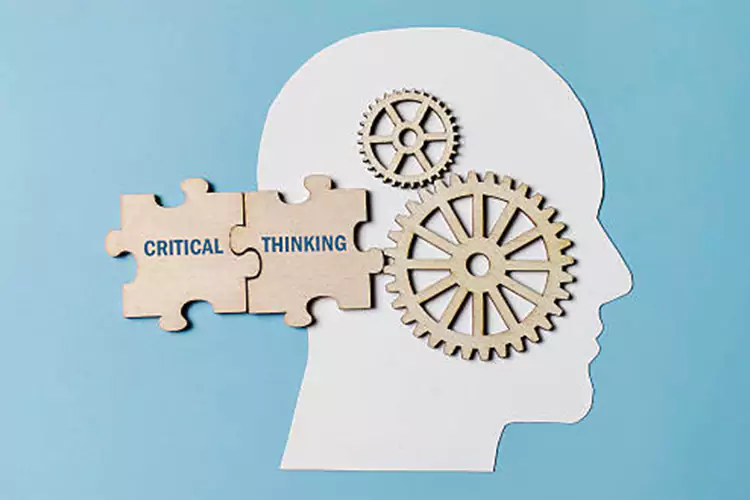
Employers value employees who think beyond the limits of their job description. Problem-solving implies identifying problems, analysing problems, and recommending constructive solutions.
If you tend to tackle problems in a calm and logical manner, then you come across as reliable to supervisors. This will cause them to share decision-making with you increasingly and give you more elevated tasks to perform.
Tips to improve problem-solving skills:
Unpack problems into smaller, more manageable chunks
Analyse issues from multiple aspects
Question "why" before coming to a conclusion?
Draw Lessons from Past Errors
Offer solutions, not just point out problems
5. Time Management and Discipline

Good time management practices indicate professionalism and respect for the efforts of others. It also involves tasks such as prioritising, meeting deadlines, and organising.
Those who are good at time management are the least stressed and perform steadily. This helps in creating an impression of reliability when it comes to promotions.
Time management tips:
Plan your day ahead
Prioritisation based on the Urgency and Importance Matrix
Minimise multitasking
Make realistic deadlines for yourself
Minimise distractions in working hours
6. Teamwork and Collaboration

These days, teamwork is common. People are even required to coordinate roles within multiple teams. People who work well as a team communicate freely, respect differences, and support common goals. They ensure that things run more smoothly and effectively. Managers usually prefer to promote persons that build their team rather than people who work alone.
Methods for improving teamwork skills:
Talk honestly with teammates
Respect diverse work styles
Help out when it's needed
Acknowledge contributions of others
Handle Disputes Professionally
7. Leadership Skills (Even Without a Manager Designation)

Leading is not a title that applies to a position. It exists in the act of taking the initiative, working with others, and accepting the outcome. If you are visible as a leader from an early stage, it will be noted by decision-makers, which will increase the odds of you being taken into account when positions as supervisors or managers are available.
Methods to develop leadership skills:
Taking ownership of your tasks
Mentor juniors or peers if necessary
Provide constructive suggestions
Share responsibility when making errors
Show by example through your behaviour
8. Decision-Making Skills

Being able to make decisions with conviction and responsibility is always an asset. Good decision-makers analyse facts, evaluate risks, and make decisions within time constraints. Neither do they avoid taking responsibilities. This helps them gain credibility with time and express a willingness to take more responsibilities.
Methods of enhancing decision-making:
Collect information before making a decision
Think about the pros and cons
Stop overthinking when it comes to insignificant decisions
Drawing lessons from success as well as failure
Trust the judgment that comes from experience
9. Creativity and Innovation

Creativity is not the domain of specific jobs or tasks only. It's all about finding ways to work better and innovatively. Employees with the ability to think creatively are recognised as they bring more to the table beyond regular work. It does not matter how insignificant the improvement may appear; it will forever be remembered by the management of an organisation.
How to increase creativity at work:
Question existing processes in a respectful manner
Remain curious and receptive to new ideas
Learn from Other Sectors
Write down ideas as they come to you
Avoid fear in making improvements
10. Resilience and Stress Management

Work pressure, deadline, and, of course, some setbacks along the way. This is the reality. Resilience is the magic that helps you stay steady, centred, and balanced when the chips are down.
People who deal effectively with stressors appear as if they embody maturity. They do not give up but instead adapt, grow, and push ahead. This trait is the fuel for professional development.
Coping with stress and developing resilience:
Maintain healthy work-life and personal boundaries
Learn to say no when it’s called for
Take short breaks in order to recharge
What I can control is my own preparation
Failures should be seen as learning experiences
How To Begin Developing These Soft Skills
Practice active listening instead of waiting to speak yourself
Ask constructive questions that clarify confusions
Time management skills can be developed by learning to prioritise tasks with emphasis on meeting deadlines.
Observe experienced co-workers to learn their strategies in handling meetings, stress, and conflicts
Be receptive to feedback and apply it
Be open to feedback instead of reacting to it personally
Reflect on mistakes and draw lessons from them
Remain open to learning and development within your capacity and responsibilities
Always value consistency over perfect performance; small improvements accumulate when they are small
Common Mistakes Professionals Make While Ignoring Soft Skills
Most people think that having strong technical skills is enough to advance their career. Though skills are important, communication skills that are poor, having anegative attitude, or an inability to receive constructive criticism could quietly hinder you, even with outstanding work.
A second common mistake would be thinking that soft skills are fixed characteristics of a person and cannot be changed. Because of this misconception, people are not able to develop and become better at these skills, because if they are overlooked, it could result in lost opportunities and poor work relationships.
How Soft Skills Directly Impact Salary And Career Growth
Soft skills impact not only the way in which you work, but also the extent to which you will progress in a company and advance in your career. It is easy to find someone who has the skills to perform a job, but to find someone who is trustworthy with important tasks means having qualities like being a strong communicator who remains composed under stress and a strong team player. If this is what sets you apart, then there will definitely be notice for more challenging and customer-related tasks.
This is directly reflected in performance evaluations and advancement in one's job or profession as a whole. Ultimately, soft skills will establish you within a certain arena as someone who is not dependent on any one position or set of technical skills.
Conclusion
The skills you possess will definitely contribute to your entry into the work environment, but your soft skills will essentially dictate your potential. The manner in which you communicate, your capacity to exhibit emotional intelligence, your ability to evolve, your capacity to direct, and your capacity to persevere will definitely impact your perception by others within the workplace.
Encouragingly, the fact is that soft skills can be developed because they are not fixed traits. By being mindful of the need to practice these traits when the opportunity presents itself, it is possible to become better in these areas. By becoming better in these areas, one leads to becoming better in one’s profession, while becoming irreplaceable, too. These days, in the competitive atmosphere, it is imperative to possess superior soft skills.

.webp)